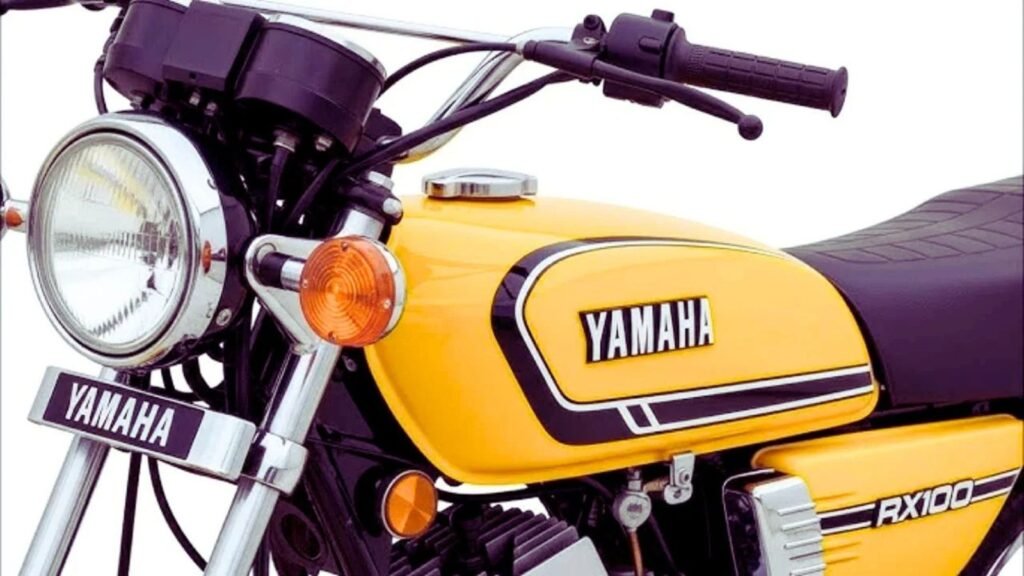

The Yamaha RX 100 is not just a motorcycle; it is an emotion for an entire generation of riders. Introduced as a lightweight and performance-oriented commuter, the Yamaha RX 100 quickly built a reputation for its sharp acceleration, simple mechanics, and thrilling riding experience. Even decades after it was discontinued, the Yamaha RX 100 continues to enjoy legendary status among motorcycle enthusiasts and collectors.
Positioned in the entry-level performance commuter segment during its time, the Yamaha RX 100 was designed for riders who valued pure mechanical engineering over unnecessary complexity. It appealed to everyday city users, young riders, and enthusiasts who wanted a compact motorcycle that delivered instant power and effortless handling. What truly made the Yamaha RX 100 special was its ability to combine daily usability with an exciting riding feel.
Today, the Yamaha RX 100 remains highly relevant in the pre-owned motorcycle market. Its lightweight construction, robust two-stroke engine, and strong emotional value have kept demand extremely high. Many riders still consider the Yamaha RX 100 one of the most enjoyable motorcycles ever built for Indian roads.
Engine and Performance Character
At the heart of the Yamaha RX 100 lies a 98 cc, single-cylinder, air-cooled, two-stroke engine that defined an era of motorcycling. This engine produces around 11 PS of maximum power at 7,500 rpm and a peak torque of 10.39 Nm at 6,500 rpm. While these numbers may seem modest by modern standards, the Yamaha RX 100 delivers performance that feels far more exciting due to its low weight and strong power-to-weight ratio.
Power is transferred to the rear wheel through a 4-speed manual gearbox that is known for its smooth and precise shifts. The throttle response of the Yamaha RX 100 is immediate, making acceleration feel instant and engaging. This characteristic made the motorcycle extremely popular among young riders and performance enthusiasts.
In city conditions, the Yamaha RX 100 feels quick off the line, allowing riders to easily navigate traffic. The two-stroke engine delivers power in a sharp and lively manner, which is very different from modern four-stroke motorcycles. This unique power delivery is one of the biggest reasons why the Yamaha RX 100 is still remembered fondly today.
Fuel Efficiency and Real-World Mileage
Despite being a performance-oriented motorcycle, the Yamaha RX 100 offers reasonable fuel efficiency when properly maintained. In real-world riding conditions, the Yamaha RX 100 delivers an average mileage of approximately 35 kmpl. This figure can vary depending on riding style, traffic conditions, and engine tuning.
The fuel tank capacity of the Yamaha RX 100 is around 10 liters, which provides a practical riding range of roughly 300 to 350 kilometers on a full tank. This makes the motorcycle suitable for daily commuting as well as short highway rides.

The carbureted fuel system plays an important role in maintaining consistent efficiency. When tuned correctly, the carburetor ensures smooth fuel delivery and optimal combustion. The low internal friction of the engine also helps maintain decent mileage levels for a two-stroke motorcycle.
Compact Dimensions and Urban Usage
One of the biggest strengths of the Yamaha RX 100 is its compact size, which makes it extremely easy to handle in urban environments. The motorcycle measures approximately 1,965 mm in length, 740 mm in width, and 1,040 mm in height. These dimensions allow the Yamaha RX 100 to move effortlessly through congested city traffic.
The wheelbase of around 1,240 mm contributes to stable straight-line performance while still allowing quick direction changes. This balance makes the Yamaha RX 100 enjoyable to ride both in tight streets and on open roads.
With a curb weight of just around 94 kg, the Yamaha RX 100 is incredibly lightweight. This low weight makes the motorcycle approachable for riders of all experience levels. Whether you are a beginner or an experienced rider, the Yamaha RX 100 feels easy to control and confidence-inspiring.
The seat height of approximately 765 mm ensures that most riders can comfortably place their feet on the ground. Ground clearance of around 136 mm is suitable for typical urban roads and light speed breakers, further enhancing everyday usability.
Ride Quality and Handling
The Yamaha RX 100 is known for its agile handling and balanced ride quality. The lightweight chassis and well-distributed weight make it easy to maneuver in traffic and enjoyable on twisty roads. The motorcycle responds quickly to rider inputs, making it feel lively and engaging at all speeds.
The suspension setup consists of telescopic front forks and twin rear shock absorbers. While basic by modern standards, this suspension configuration works well with the Yamaha RX 100’s lightweight frame. It absorbs minor road imperfections effectively and provides a stable ride on smooth and moderately rough surfaces.
Cornering on the Yamaha RX 100 feels natural and predictable. The motorcycle leans easily and maintains good balance through turns. This handling character is one of the reasons why the Yamaha RX 100 became popular not only as a commuter but also as a track and drag racing favorite.

Braking System and Safety Hardware
Braking duties on the Yamaha RX 100 are handled by drum brakes at both the front and rear. The front drum brake measures approximately 130 mm, while the rear drum brake is around 110 mm. Although basic, this braking setup is effective for the motorcycle’s weight and performance level.


The braking feel is progressive and predictable, allowing riders to control stopping power easily. While modern safety features like ABS are absent, the Yamaha RX 100’s lightweight nature ensures that braking distances remain manageable when ridden responsibly.
The simplicity of the braking system aligns perfectly with the Yamaha RX 100’s mechanical philosophy. Fewer components mean easier maintenance and lower repair costs, which adds to the motorcycle’s long-term appeal.
Lighting and Electrical System
The Yamaha RX 100 uses a straightforward lighting setup that focuses on functionality rather than complexity. The motorcycle is equipped with a halogen headlamp that provides adequate illumination for night riding. The halogen tail lamp and conventional turn indicators complete the lighting package.
The electrical system operates on a 6-volt setup, which was standard during the Yamaha RX 100’s production era. While this system may seem outdated today, it is reliable and easy to maintain. Many owners appreciate this simplicity, as it reduces the chances of electrical failures.
The basic analog instrument cluster displays essential information such as speed, fuel level, and indicator lights. This no-nonsense approach reinforces the Yamaha RX 100’s reputation as a pure rider-focused machine.
Ownership Experience and Maintenance
Owning a Yamaha RX 100 is relatively affordable, especially when compared to modern motorcycles with complex electronics. Routine maintenance tasks include carburetor cleaning, spark plug replacement, air filter cleaning, and clutch adjustment. These procedures are simple and can often be handled by local mechanics.
Spare parts availability for the Yamaha RX 100 remains surprisingly good. Many mechanical components are available through aftermarket suppliers, making repairs and restorations possible even today. However, original parts in excellent condition can be expensive due to high demand.

Insurance costs for the Yamaha RX 100 are generally low, and overall ownership expenses remain manageable. For enthusiasts who enjoy working on their motorcycles, the Yamaha RX 100 offers a rewarding ownership experience.
Price in the Used Motorcycle Market
In the Indian used motorcycle market, the Yamaha RX 100 commands strong resale value. Prices typically range between ₹80,000 and ₹2,00,000, depending on factors such as condition, originality, and location. Well-maintained motorcycles with original paint, engine parts, and documentation often attract premium prices.
The high demand for the Yamaha RX 100 is driven by nostalgia, collector interest, and its legendary riding feel. Many buyers view the Yamaha RX 100 not just as a motorcycle, but as a long-term investment.
Cultural Impact and Enthusiast Following
The Yamaha RX 100 holds a special place in motorcycle culture. It became a symbol of performance and freedom during its time and continues to inspire custom builds, restorations, and racing projects. Enthusiast communities actively share knowledge, spare parts sources, and restoration tips.
The sound, smell, and riding feel of the Yamaha RX 100 are often described as irreplaceable. These sensory elements contribute heavily to its cult status and emotional value.
Yamaha RX 100 Conclusion
The Yamaha RX 100 stands out as a compact motorcycle that delivers strong engine performance, agile handling, decent fuel efficiency, and low ownership costs. Its 98 cc two-stroke engine, lightweight construction, simple safety hardware, and easy maintenance make it a unique and unforgettable machine.
Even in today’s modern motorcycle landscape, the Yamaha RX 100 continues to attract riders who appreciate mechanical purity and an engaging riding experience. For those who value simplicity, character, and timeless performance, the Yamaha RX 100 remains one of the most iconic motorcycles ever made.