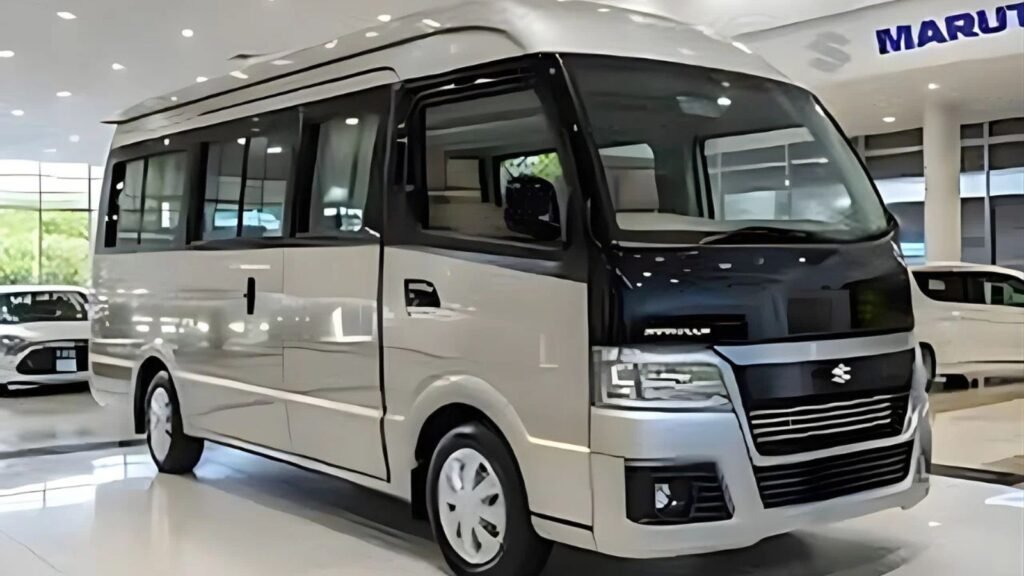

Maruti Suzuki has stepped into an important and highly practical segment with the introduction of the Maruti Mini Bus 2026. Designed specifically for Indian conditions, this compact people mover focuses on affordability, durability, and low operating costs. Whether it is small transport operators in rural areas, school shuttle services, hotel pickup vehicles, or large joint families needing extra seating capacity, the Maruti Mini Bus 2026 is built to serve real-world needs.
With a starting price of ₹4.99 lakh and a claimed mileage of up to 28 kmpl, the Maruti Mini Bus 2026 is clearly aimed at buyers who are extremely conscious about both purchase price and running expenses. In addition, EMI options starting at around ₹5,999 per month make it even more accessible to small business owners and first-time commercial vehicle buyers.
In a market where full-size vans and buses can be expensive and heavy on maintenance, the Maruti Mini Bus 2026 offers a balanced alternative. It delivers adequate seating capacity, decent performance, and strong fuel efficiency without pushing ownership costs too high. Let’s explore in detail what makes this new launch significant for the Indian market.
Key Specifications – Maruti Mini Bus 2026
| Specification | Details |
|---|---|
| Engine | 1.2-litre petrol |
| Fuel Type | Petrol |
| Transmission | 5-speed manual |
| Maximum Power | 82 PS |
| Maximum Torque | 113 Nm |
| Claimed Mileage | Up to 28 kmpl |
| Seating Capacity | 8 to 10 passengers |
| Drivetrain | Rear-wheel drive |
| Suspension | Heavy-duty tuned setup |
| Emission Norm | BS6 Phase 2 compliant |
| Starting Price | ₹4.99 lakh (ex-showroom) |
Exterior Design and Styling
The Maruti Mini Bus 2026 follows a straightforward and highly functional design philosophy. Instead of focusing on aggressive styling or flashy design elements, the vehicle prioritizes practicality and space utilization. Its boxy shape may look simple, but this approach maximizes cabin room and makes it easier to accommodate more passengers comfortably.
A tall roofline is one of the biggest advantages of the Maruti Mini Bus 2026. It allows passengers to enter and exit the vehicle without bending excessively, which is particularly helpful for elderly passengers and school children. This practical feature makes the vehicle well-suited for daily transport operations.
Large windows surround the cabin, improving natural ventilation and offering a bright, airy feel inside. In Indian weather conditions, proper airflow is extremely important, especially in non-AC commercial vehicles. The wide windows also enhance visibility for passengers, reducing the feeling of confinement during longer journeys.
At the front, the Maruti Mini Bus 2026 carries a simple grille design that aligns with Maruti Suzuki’s familiar styling language. The headlamps are large and practical, ensuring good visibility during early morning or evening drives. Sturdy bumpers and steel wheels underline its utilitarian character. Overall, the exterior design clearly communicates that the Maruti Mini Bus 2026 is built for work, durability, and daily use rather than style statements.
Engine, Performance and Real-World Driving Experience
Powering the Maruti Mini Bus 2026 is a 1.2-litre petrol engine that produces 82 PS of maximum power and 113 Nm of torque. This engine is tuned for reliability and smooth performance rather than aggressive acceleration. In commercial applications, consistency and fuel economy matter more than speed, and the Maruti Mini Bus 2026 delivers exactly that.
In real-world conditions, the engine performs adequately even when the vehicle is carrying a full load of passengers. The low-end torque helps the Maruti Mini Bus 2026 handle speed breakers, flyovers, and rural inclines without frequent gear shifts. Drivers who operate in semi-urban or rural areas will appreciate this smooth power delivery.
The 5-speed manual gearbox is easy to operate, and the clutch has been tuned to remain light. This reduces fatigue for drivers who spend long hours behind the wheel. The rear-wheel-drive setup in the Maruti Mini Bus 2026 ensures better load distribution and improved stability when carrying passengers.
While highway cruising is stable, it is clear that the Maruti Mini Bus 2026 is optimized primarily for city routes, short intercity trips, and rural transport operations rather than high-speed highway driving.
Mileage and Fuel Efficiency
One of the biggest highlights of the Maruti Mini Bus 2026 is its claimed mileage of up to 28 kmpl. In a segment where fuel cost plays a critical role in profitability, this figure is highly attractive.
Under real-world Indian driving conditions, operators can expect mileage between 20 and 23 kmpl, depending on passenger load, driving habits, and road conditions. Even at these realistic figures, the Maruti Mini Bus 2026 remains one of the most fuel-efficient options in its category.
For small transport operators, better fuel efficiency directly translates into higher profit margins. For large families using the Maruti Mini Bus 2026 for personal purposes, it means reduced monthly fuel expenses. With petrol prices fluctuating across the country, such efficiency becomes a major advantage.
Interior Comfort and Practicality
Inside the cabin, the Maruti Mini Bus 2026 focuses on durability and space optimization. Buyers can choose between 8-seater and 10-seater configurations based on their needs. This flexibility makes the vehicle suitable for school vans, hotel shuttles, rural transport services, and large families.
The seats are designed to be firm and supportive. While they may not offer luxury-level cushioning, they are built for daily use and long-term durability. Adequate headroom ensures passengers do not feel cramped, even in the rear rows.
The driving position in the Maruti Mini Bus 2026 is slightly elevated, giving drivers a commanding view of the road. This is particularly helpful in crowded Indian traffic conditions where visibility can make a big difference in safety.
Storage compartments for documents, water bottles, and small items are placed strategically around the cabin. Practicality remains the core strength of the Maruti Mini Bus 2026, and every design decision reflects that focus.
Features and Technology
Although the Maruti Mini Bus 2026 is positioned as an affordable people mover, it does not completely ignore modern conveniences. Higher variants may include basic infotainment with Bluetooth connectivity, USB charging ports, and power steering.
These features are especially useful for drivers who spend several hours on the road daily. Bluetooth connectivity allows hands-free communication, while USB ports ensure mobile devices remain charged.
सम्बंधित ख़बरें




However, the Maruti Mini Bus 2026 avoids complex technology that could increase costs or maintenance challenges. The focus remains on simplicity, reliability, and ease of repair—qualities that commercial users value highly.
Safety, Build Quality and Compliance
Safety features in the Maruti Mini Bus 2026 are designed to meet regulatory requirements while maintaining affordability. The vehicle includes ABS with EBD, seat belts for all passengers, and a driver airbag in select variants.
The reinforced body structure provides additional strength, which is important for vehicles used frequently in rural and semi-urban areas. The Maruti Mini Bus 2026 also complies with BS6 Phase 2 emission norms, ensuring cleaner engine performance and regulatory compliance.
Build quality feels solid enough to withstand daily wear and tear. For commercial applications, durability is more important than premium finishes, and the Maruti Mini Bus 2026 addresses that need effectively.
Variants and Colour Options
Maruti Suzuki offers the Maruti Mini Bus 2026 in multiple variants to suit different customer categories. Differences between variants mainly involve seating configuration and feature availability.
Colour options are practical and fleet-friendly, including shades like white, silver, and light grey. These colours are easy to maintain and often preferred by commercial operators due to better resale value.
Price Positioning and Competition
With a starting price of ₹4.99 lakh, the Maruti Mini Bus 2026 is positioned competitively in the entry-level commercial people-mover segment. It undercuts many larger vans while offering better fuel efficiency.
Maruti Suzuki’s widespread service network gives the Maruti Mini Bus 2026 a strong advantage. Spare parts availability, lower maintenance costs, and strong resale value enhance its overall ownership appeal.
Who Should Buy the Maruti Mini Bus 2026?
The Maruti Mini Bus 2026 is ideal for:
-
Small transport operators in rural and semi-urban areas
-
School and college shuttle services
-
Hotel pickup and drop services
-
Entrepreneurs starting local passenger transport businesses
-
Large joint families needing extra seating
Its affordability and low running cost make the Maruti Mini Bus 2026 a practical solution for multiple use cases.
Final Verdict
The Maruti Mini Bus 2026 fills a crucial gap in the Indian automotive market. It offers a budget-friendly, fuel-efficient, and practical solution for transporting more passengers without stepping into expensive full-size commercial vehicles.
While it may not deliver luxury features or advanced technology, the Maruti Mini Bus 2026 excels in the areas that truly matter—mileage, reliability, ease of maintenance, and affordability. For buyers seeking a dependable people mover with low ownership costs, the Maruti Mini Bus 2026 stands out as a sensible and financially smart choice.