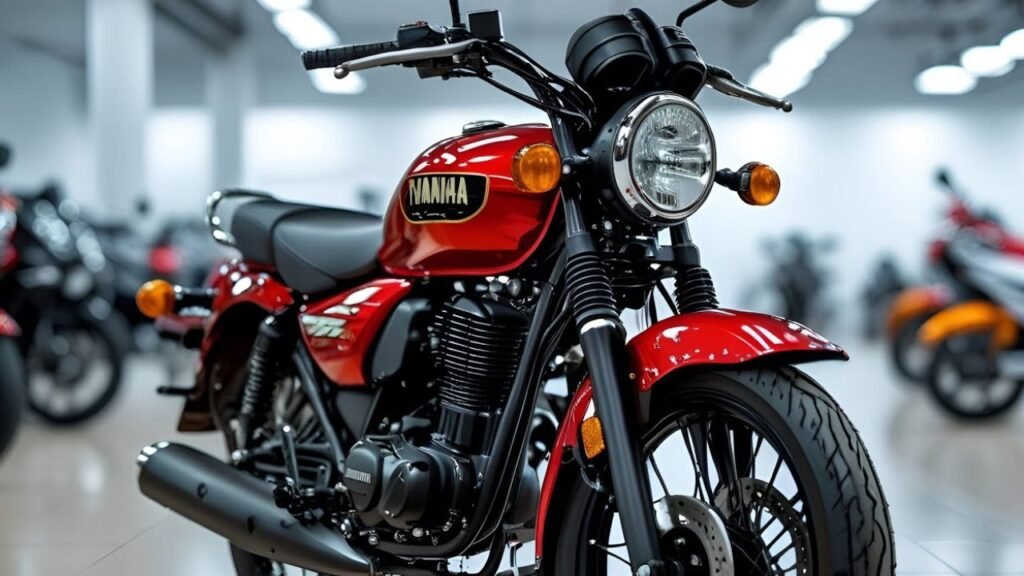

The Yamaha RX100 is not just a motorcycle; it is an emotion that shaped an entire generation of riders in India. First introduced in the mid-1980s, this legendary two-stroke bike quickly became a symbol of speed, power, and youthful rebellion. Even decades after its discontinuation, the Yamaha RX100 continues to enjoy cult status among bike enthusiasts, collectors, and nostalgic riders.
2026 Rolls-Royce Motorhome Revealed: 710 HP V12 Power Meets Phantom-Level Ultra-Luxury
Now, with renewed interest in retro motorcycles and classic designs, discussions around the RX100 returning in a refreshed form have once again captured the imagination of Indian riders. While the original RX100 is remembered for its raw power and unmistakable exhaust note, the new-age interpretation focuses on blending classic charm with modern efficiency and usability.
Yamaha RX100: A Legend That Defined an Era
When the RX100 was launched, it completely changed the Indian motorcycle market. At a time when most bikes focused on fuel efficiency and basic commuting, the RX100 brought excitement, performance, and attitude. Its lightweight body and high-revving two-stroke engine made it one of the quickest motorcycles in its segment.
The Yamaha RX100 stood out not because of fancy features, but because of how it made riders feel. It was fast, loud, and thrilling—qualities that instantly connected with young riders across India.
Even today, the name RX100 sparks instant recognition and respect.
Key Highlights of the Yamaha RX100
| Feature | Details |
|---|---|
| Engine | 98cc, air-cooled, 2-stroke |
| Power Output | Approx. 11 HP |
| Gearbox | 4-speed manual |
| Kerb Weight | Around 100 kg |
| Top Speed | Approx. 100 km/h |
| Brakes | Front & rear drum brakes |
| Mileage | 25–30 km/l (classic model) |
| Production Period | 1985–1996 |
| Legacy | Cult classic motorcycle |
Why the Yamaha RX100 Was So Popular in India
The success of the RX100 came from a perfect balance of power, simplicity, and design. Unlike heavier four-stroke bikes of that era, the RX100 delivered instant acceleration thanks to its two-stroke engine.
Some key reasons for its massive popularity include:
-
Explosive throttle response
-
Lightweight and agile handling
-
Sharp and aggressive exhaust sound
-
Simple mechanical design
-
Strong road presence despite compact size
The Yamaha RX100 was equally loved in cities and rural areas. It performed well on highways, village roads, and even informal racing circuits.
Engine Performance: Raw Power That Created History
At the heart of the RX100 was a 98cc air-cooled two-stroke engine producing around 11 horsepower. On paper, these numbers may look modest today, but combined with its low weight, the RX100 delivered performance that was unmatched in its time.
The bike could reach 60 km/h in just a few seconds, which was phenomenal during the 1980s and 90s. This instant power delivery made the Yamaha RX100 a favourite among drag racers and street riders.

The engine was simple, easy to repair, and extremely durable if maintained properly—another reason why many RX100s are still running today.
Also Read – Yamaha Electric Cycle 2026
Design and Styling: Simple, Sporty, Timeless
The Yamaha RX100 followed a clean and purposeful design language:
-
Flat seat for rider comfort
-
Slim fuel tank with classic Yamaha branding
-
Minimal body panels
-
Round headlamp and analogue meters
-
Spoked wheels and chrome accents
This simplicity is exactly what makes the Yamaha RX100 timeless. Even today, restored RX100s turn heads on Indian roads.
Modern retro bikes try hard to recreate this charm—but the original RX100 did it naturally.
Ride Quality and Handling
Thanks to its lightweight chassis and well-tuned suspension, the Yamaha RX100 was incredibly easy to handle. Whether weaving through traffic or cruising on open roads, the bike felt responsive and confident.
Key ride characteristics included:
-
Excellent balance at low and high speeds
-
Easy cornering due to low weight
-
Comfortable suspension for Indian roads
-
Predictable braking performance
For many riders, the Yamaha RX100 was their first introduction to performance riding.



Mileage and Practicality
The original Yamaha RX100 delivered 25–30 km/l, depending on riding style and tuning. While this may not sound impressive by today’s standards, it was acceptable for a performance-focused two-stroke motorcycle.
In discussions around a modern RX100-inspired model, expectations point towards a much higher mileage—possibly around 45–50 km/l, thanks to modern four-stroke or hybrid engine technology.
This balance of nostalgia and efficiency is what excites today’s riders the most.
Why the Yamaha RX100 Was Discontinued
Despite its popularity, the Yamaha RX100 was discontinued in 1996 due to stricter emission norms. Two-stroke engines produced higher pollution levels, making them non-compliant with new regulations.
Yamaha later introduced models like the RXG, RX-Z, and RX135, but none could truly replace the original RX100’s charm.
Yamaha RX100 as a Cult Classic Today
Even after nearly three decades, the Yamaha RX100 enjoys legendary status. Well-maintained models often sell for ₹80,000 to ₹1.5 lakh, and sometimes even more for fully restored or original-condition bikes.
Collectors value the RX100 for:
-
Its historical significance
-
Mechanical simplicity
-
Racing heritage
-
Emotional connection
Restoration communities and RX100 fan clubs continue to grow across India.
Can the Yamaha RX100 Work in Today’s World?
If Yamaha brings back the RX100 name in a modern form, it will likely focus on:
-
Retro-inspired design
-
BS6-compliant four-stroke engine
-
Improved mileage and refinement
-
Modern safety features like disc brakes and ABS

Such a motorcycle would appeal to:
-
Nostalgic riders
-
Young enthusiasts
-
Urban commuters wanting a stylish retro bike
The Yamaha RX100 brand value alone is strong enough to create massive demand.
Frequently Asked Questions (FAQs)
Is Yamaha RX100 still available new?
No. The original Yamaha RX100 was discontinued in 1996. Only used and restored models are available today.
What is the price of a used Yamaha RX100?
Depending on condition, prices range from ₹50,000 to over ₹1.5 lakh.
Why is the Yamaha RX100 so famous?
Because of its unmatched power-to-weight ratio, iconic sound, and emotional connection with riders.
Can RX100 be used daily?
Yes, but maintenance and spare parts availability can be challenging.
Will Yamaha launch RX100 again?
There is no official confirmation, but strong market interest keeps the discussion alive.
Final Thoughts: Yamaha RX100 Is More Than a Motorcycle
The Yamaha RX100 is not just remembered—it is celebrated. Few motorcycles in India have achieved this level of emotional and cultural impact. From its raw two-stroke power to its unmistakable exhaust note, everything about the RX100 created memories that refuse to fade.
Whether Yamaha revives the name or not, the RX100’s legacy is eternal. It represents freedom, speed, and a golden era of motorcycling in India.
Maruti Wagon R 2026: Spacious, Efficient & Perfect Premium Design SUV
Some Important Link
| Download News APP | Click Here |
| WhatsApp Group | Click Here |
| Home Page | Click Here |